- Shout/Things You Do (Decca F11716) 1963
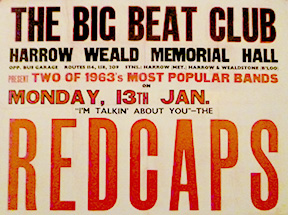
- Talkin' About You/Come On Girl (Decca F11789) 1963
- Mighty Fine Girl/Funny Things (Decca F11903) 1964
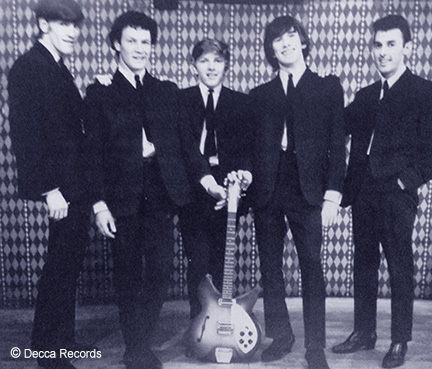
The Redcaps
WALSALL
Updated March, 2023
Mac Broadhurst saxophone
Roy Brown lead guitar (left in 1964)
Alan Morley drums
Dave Walker lead vocal, guitar, harmonica
Mick Walker vocal, bass guitar
Mick Blythe lead guitar (joined in 1964)
One of the most admired bands in the West Midlands during the early 1960s was 'The Redcaps'. Known as a "groups group", The Redcaps were a big influence on many young local musicians at the time. Music historian Brian W. Nicholls from Varsity Rag with assistance from Redcaps guitarist and founding member Mick Walker has kindly supplied the biography of the group that can now be seen here exclusively on the BrumBeat website as follows:
"We were doing eight one hour spots a day, every day"
Musically speaking, 1963 marked the arrival of the "beat boom" in Great Britain generated by the 22nd March, 1962 rush release of the first Beatles album 'Please Please Me' recorded between 9:00 am and 10:45 pm on Monday 11th February, 1962 which was to become a major influence on the decade when innovative pop music would provide the sound track for a social revolution within the UK. This revolution was actually born in the mid-1950's USA with the proliferation of black American rhythm & blues and its 'discovery' by white teenagers on both sides of the Atlantic.
However, the music did actually die at the end of the 1950s. We lost Buddy Holly and Eddie Cochran, Elvis Presley was in the army, Chuck Berry was in jail, Little Richard threw in the towel in favour of preaching and Jerry Lee Lewis had fallen from grace for marrying his 13 year old second cousin! 1960 to 1962 was a fallow period for exciting music but, it probably cleared the decks for arrival of the breath of fresh air!
Meanwhile, in Birmingham during October, 1963 the first sell-out issue of 'Midland Beat' hit the news stands with the headline, "BRUM BEAT HITS CHARTS" - Midlands Groups on Radio and, TV too. The article went on to report... "The Brum Beat is in the hit parade - The Bruisers (Birmingham) and The Redcaps (Walsall) have been leading the way with their singles 'Blue Girl' and 'Shout' respectively, and both have made progress in the Melody Maker and New Record Mirror Top 50."
Noticeably, provincial groups were quick to jump on the bandwagon of the new wave of R&B pioneered by The Beatles via ballroom tours and regular BBC radio shows and The Redcaps were amongst the first to cash in on the new Beat Boom as it was called. So, where did the name Redcaps originate? "We admired The Blue Caps - Gene Vincent's backing group - so, we plumped for Redcaps, as simple as that" recalled Mick Walker.
During their musical career which spanned 1960 to 1965, The Redcaps shared the billing with "every national group you could think of - and we also backed many solo artistes who appeared at the Regan ballrooms including Gene Vincent and Stevie Wonder and was opening act for, Jerry Lee Lewis, Four Seasons, Adam Faith and The Roulettes, Dave Berry and The Cruisers and, The Beatles".
The growing reputation of The Redcaps soon earned them the name of "The Group's Group" amongst local musicians who, made a point of seeing them perform on their nights off. The first incarnation of Walsall group, The Redcaps, was twin brothers Mick and Dave Walker who, like all other young musicians of the period, had cut their teeth playing skiffle under the inevitable influences of Lonnie Donegan, The Vipers Skiffle Group, and Chas Mc Devitt and his Skiffle Group - to name but three.
The twins began their musical journey via piano lessons at the age of seven and continued for five or six years until they passed their classical music exams. Mick tried the trumpet, no doubt influenced by Eddie Calvert but, that was short lived. "I had no lip for it!" recalls Mick. The twins bought two cheap second hand acoustic guitars and, along with a couple of mates who played tea chest bass and basic drums, began the inevitable foray into the skiffle craze whilst at its peak in 1957.
At the time, two other brothers in Walsall, Roy (guitar) and Ronnie Brown (vocals) were also doing the same as the Walker twins so, they approached Mick and Dave and proposed a merger into what became, in 1961 'Ronnie King and The Redcaps' - managed by Roy and Ronnie's dad. Walsall drummer Jimmy Richards and saxophonist Mac Broadhurst from Norton Canes completed the line up.
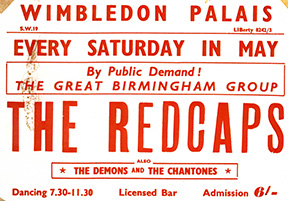
Roy and Ronnie's dad secured some lucrative regular work for the group. Every Saturday night they played at Bloxwich Baths and every Tuesday and Thursday at Mid Cannock Miners Club. They also were regulars at The Bridgetown Tavern in Cannock. Remember, in those days Cannock was a thriving coal mining community and the social club was the focus of the community seven nights a week.
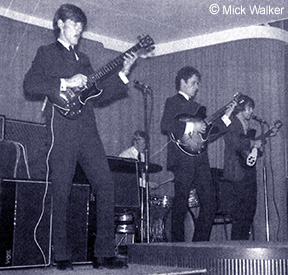
"we heard things on the juke box that were unheard of back home"
During an on-stage "misunderstanding" between Ronnie and Dave one evening at a gig in Wednesbury regarding when to come in with the vocal following an intro, Ronnie stormed off stage, never to be seen again. 'Ronnie King and The Redcaps' now became 'The Redcaps' with the soulful and very able Dave Walker taking on all lead vocals as well as rhythm guitar. They were no longer a "him and them" type group but, a self contained unit - just like The Beatles - who they went on to support on four separate occasions.
Following a successful apprenticeship of local gigs, the lads turned professional in 1962 and were off to Fontenet in the south of France to entertain the troops at USA army bases. Mick said; "It was just as tough as those gigs in Germany that all the other groups of the era talk about. We were doing eight one hour spots a day, every day but, we heard things on the juke box that were unheard of back home."
The boys were playing for the regular soldiers whereas, the sergeant's mess was graced with with the the presence of Liverpool group 'Rory Storm and The Hurricanes'. This group had a drummer by the name of Richard Starkey who went on to discover fame and fortune with 'The Beatles'. Whilst there, the Cuban missile crisis kicked off and the Commander in charge said that they would be conscripted into the US army. "We loaded all our gear into our Commer van and slipped quietly away under cover of darkness!" said Mick Walker.
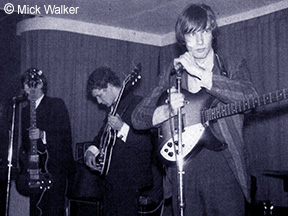
On returning from France, Jimmy Richards and Roy Brown decided to call it a day and leave the group. They were replaced by Alan Morley from Blackheath on drums and Mick Blythe from Albrighton on lead guitar. It was this line-up that recorded the first two singles for Decca. Roy Brown left the group for health reasons after the second single and was replaced in May, 1964 by Mick Blythe from Albrighton group 'The Tremors' who started out as a skiffle group in the late 1950s called 'Red Rebel'. Other names to emerge from The Tremors were Johnny O'Hara (The Californians), Mac Bailey (Tommy Burton) and Martin de Vries (The Strollers).
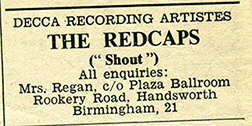
Andy Maclachlan, the bass player with The Tremors was also the boss of Domino Sound Studio - a professional recording studio situated at number 16, High Street, Albrighton where The Redcaps (like many other Black Country groups) were to record a number of demo discs. The Tremors eventually morphed into 'Zuider Zee' in 1965. In March 1964, the aforementioned Midland Beat had carried an advert inviting people to join the 'Official Redcaps Fan Club'. The ad was posted by fan club secretary Cheryl Skipp from Handsworth in Birmingham not far from their regular haunt, The Plaza.
Like The Beatles and most all other Mersey Beat groups for that matter, The Redcaps "were influenced by material not usually heard in the UK" said Mick Walker. "Our American influences were The Bill Black Combo, all the black R&B artists including the much covered Chuck Berry. In the UK, one of our main influences was 'Johnny Kidd and The Pirates'. Much of the elusive American material was brought in by merchant seamen via Liverpool docks which culminated in the famous and unique Mersey Sound" said Mick.
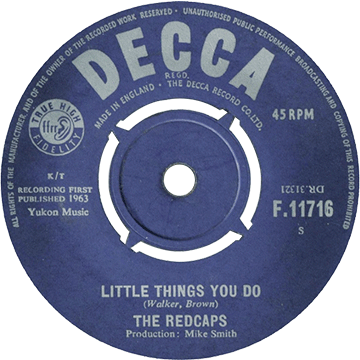
The Redcaps were signed to Decca by Chief A & R (Artist and Repertoire) man, Dick Rowe who made a special journey from London to see them perform live at The Plaza, Handsworth. This signing was several months before the aforementioned Norrie Paramor 'Brumbeat' campaign. Rowe was the man famous (or infamous) for turning down The Beatles at a Decca recording test on New Year's Day 1962 - on the grounds that; "Four-piece groups with guitars are finished" but, he redeemed himself by signing 'Brian Poole and The Tremolos' and 'The Rolling Stones'.
Nevertheless, the quality of all six Redcaps' sides proved that Rowe was no slouch when it came to record production even though, as Mick Walker recalls; "Musically speaking, Dick didn't know a crotchet from a hatchet!" The Redcaps first Decca single 'Shout' was a cover of an Isley Brothers' USA hit which was then covered by 'Lulu and The Luvvers' but, some twelve months after The Redcaps' release. The flip side of The Redcaps' version was 'Little Things You Do' written by Mick and Dave Walker and then lead guitarist, Roy Brown - marking the boys' first foray into serious songwriting.
"We did the whole song in just two takes on a four track recorder"
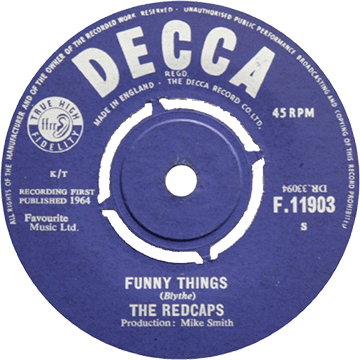
The second Decca single was 'Talkin' About You' c/w 'Come on Girl'. The A-side was a cover of Chuck Berry's hit and the B-side by Bert Burns of the Isley Brothers. The third Decca single titled 'Funny Things' was written by new lead guitarist Mick Blythe in the van on the journey to London and the B-side 'Mighty Fine Girl' was composed by Chris Andrews perhaps better known for his 1965 hit 'Yesterday Man'.
Mick Blythe's 'Funny Things' was covered by 'The Retreads' and their version went to Number Two in the German charts on the Fontana label. "I was paid 25 pound in royalties" said Mick (worth around 500 in today's money). I told Mick Walker that my favourite Redcaps side was 'Talkin' About You' and asked him how it was recorded. "We did the whole song in just two takes on a four track recorder. Producer Dick Rowe used a couple of microphones over the drums and the whole thing was done in just over an hour."
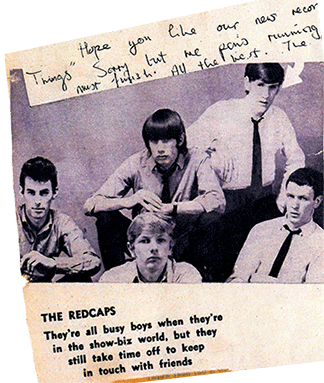
The previously mentioned Plaza ballroom in Handsworth was owned by Redcaps manager Mary Regan (or "Ma" Regan as she was affectionately known). She also owned The Plaza, Old Hill; The Ritz, Kings Heath; and The Brum Cavern Club in Small Heath. She was ably assisted by her husband Joe Regan who always acted as MC when international groups appeared at one of the ballrooms. The Regan ballrooms were open Wednesday, Friday, Saturday and Sunday evenings from 8.00 pm until late and regularly featured top chart groups and solo artists from the UK and USA.
Ma Regan managed other groups in addition to The Redcaps and generously supplied them with the latest Vox AC30 amplifiers. Before the trio of Vox amplifiers though, The Redcaps, like all other groups of the time, originally assembled their own home made sound systems from basic Linear amplifiers (manufactured by Northern Transformers Ltd) coupled with home made speaker cabinets until they could afford Vox, Fender or Selmer amplifiers.
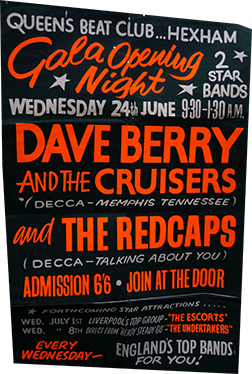
Mick said; "We started with Linear amps and then Selmer and finally, Ma Regan's Vox amps". As for guitars and bass, Mick said; "We started with Hofners, then Burns, Fenders and finally Gibson". With each venue also having the latest state of the art PA systems the sound quality was first class for the time.
"Playing the Regan Circuit could be a gruelling experience" recalled Mick. "It was quite common for her own groups to be expected to play at three of the ballrooms in one night. Imagine, starting at The Plaza, Handsworth for a 45 minute spot and then on to The Plaza, Old Hill for the same and then finishing at the Ritz, Kings Heath. Think of all the packing and unpacking of all the gear!"
The Redcaps did all this as well as fulfilling other gigs outside the Regan ballroom circuit. Drummer Alan Morley was reported in 'Midland Beat' as continually expressing his displeasure about the constant dismantling and assembling his drum kit. Compared with guitarists and bass players, who really just plug and play, drums on the other hand are a tedious operation, to say the least! "There were no roadies in those days" said Mick. "You did all the lugging yourselves."
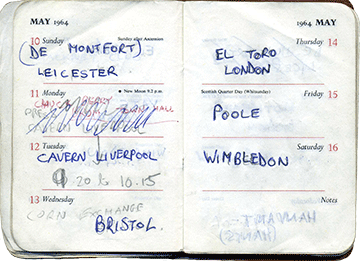
"It was great travelling all over the country in a van covered with messages scrawled in lipstick"
One fan and aspiring star who never missed a Saturday night studying The Redcaps at Bloxwich Baths was Noddy Holder who was also a classmate of lead guitarist Roy Brown at TP Riley School in Bloxwich. Noddy would socialise with the group during the break picking up useful tips which have obviously put him in good stead for his future career with with The Memphis Cutouts, Steve Brett and The Mavericks, The 'N Betweens and Slade. Noddy acknowledges The Redcaps' influence in his biography titled 'Who's Crazy Now?'
As someone who, as an aspiring musician in 1963, the author has had the privilege of experiencing The Redcaps perform 'first hand' on many occasions at The Ritz and later to appear with them as a support group in The Fleetwoods at The Brum Cavern. I have to say that they WERE special and it was well worth going out of your way to see them perform. As well as along with his bandmates, being a serious musician, Mick Walker started to emerge as a comedian and would augment the group's set-list with his unique brand of humour which earned them the nickname of "The Madcaps".
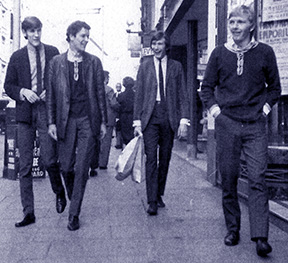
Mick said; "There will never ever be a repeat of those wonderful days. People still come up to me with their collections of Redcaps memorabillia and ask me to autograph it. It was great travelling all over the country with a van covered with messages scrawled in lipstick. It was a hectic time where we worked continuously and all the days have rolled into one continuous period but, the fans seem to have greater memories of what we did than we do!"
After The Redcaps disbanded in January 1965 following an acrimonious contractual dispute with Decca records, Dave Walker went on to form a band called "Beckett" along with Pete Oliver, Don McGinty and Colin Tomlinson and from 1965 to 1969 had a residency at the popular Rum Runner night club in Broad Street, Birmingham where brother Mick was the manager. Dave was also in the big Brum band Traction. In the 1970's Dave went on to play with The Idle Race, Savoy Brown, Fleetwood Mac, and Black Sabbath. He is still in the music business and now lives, plays and records as "The Dave Walker Band" in America (see BrumBeat Dave Walker Feature).
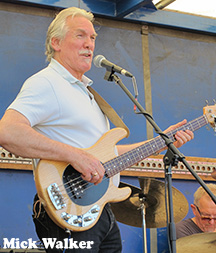
Mick Walker formed his own jazz/comedy trio in 1969 and did a 10 month season at the prestigious Pigalle club in Piccadilly, London before then touring the UK cabaret circuit and then a season on the Queen Elizabeth II. He has since worked as a movie stuntman and also as a personal bodyguard to both Elton John and Freddie Mercury. Mick has worked on BBC comedy shows with Tom O'Connor and, up to his retirement a couple of years ago, was in much demand working as an after dinner speaker. Mick now lives "Out in the sticks" just outside Bridgnorth, Shropshire. Mick Walker passed away suddenly on February 24, 2016.
Mick Blythe, who lives just outside Wolverhampton, has played in various dance bands. He has also played in various groups with Mac Broadhurst who now lives in Burton Upon Trent. Drummer Alan Morley now lives in Bridgnorth, Shropshire. Over the years, Alan has continued to play in various bands such as, Stan Web's Chicken Shack, and today he drums with a local functions band called 'Rock Steady'.
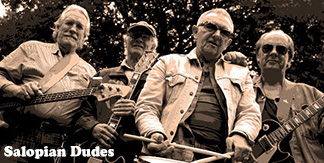
During 2013, Mick Walker, Alan Morley and Mick Blythe, along with a local guitarist Steve Field, re-formed as 'The Salopian Dudes' - a very popular R&B band much in the same vein as Muddy Waters, The Yardbirds, Cream and Peter Green's Fleetwood Mac. All of the 'Dudes' are excellent musicians and articulate purveyors of purist 'Chicago Blues' which is proving immensely popular wherever they perform. Listening to them, you could say that they are well and truly a "Recap of The Redcaps!"
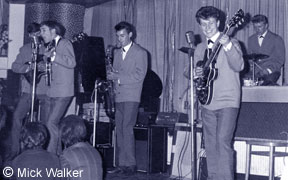
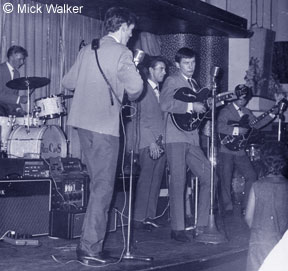
Acknowledgement: A special thanks to Mick Walker for agreeing to meet up with me on 18 November, 2008 at The Brasserie in Bridgnorth to be interviewed for this much awaited and exclusive Redcaps bio. Also, his wife Mirta for the provision of the 'priceless' photographs of The Redcaps at a live gig. (copyright: Mick Walker). Other images copyright: Dennis Detheridge (Former editor of Midland Beat). Author: Brian W. Nicholls.
The author would love to hear from anyone who can recall The Redcaps at any of the aforementioned venues and also if they who have any 'snaps' of the lads. You can contact Brian Nicholls at; nicknicholls1960@gmail.com
Copyright © Brian W. Nicholls 2009
To see a special BrumBeat feature on Dave Walker click HERE.
The Redcaps 1960s Record Releases
Singles: