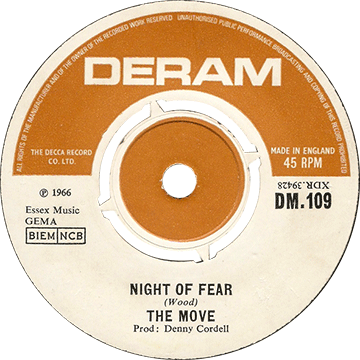
- Night Of Fear/Disturbance (Deram DM 109) Dec/1966 (2)
- I Can Hear The Grass Grow/Wave The Flag And Stop The Train (Deram DM 117) April 1967 (5)
- Flowers In The Rain/(Here We Go Round) The Lemon Tree (Regal Zonophone RZ 3001) September 1967 (2)
- Cherry Blossom Clinic/Vote For Me (Regal Zonophone) November 1967 (release cancelled)
- Fire Brigade/Walk Upon The Water (Regal Zonophone RZ 3005) February 1968 (3)
- Wild Tiger Woman/Omnibus (Regal Zonophone RZ 3012) July 1968
- Blackberry Way/Something (Regal Zonophone RZ 3015) January 1969 (1)
- Curly/This Time Tomorrow (Regal Zonophone RZ 3021) August 1969 (12)
- Brontosaurus/Lightning Never Strikes Twice (Regal Zonophone RZ 3026) March 1970 (7)
- When Alice Comes Back To The Farm/What? (Fly BUG 2) September 1970
- Tonight/Don't Mess Me Up (Harvest HAR 5038) June 1971 (11)
- Chinatown/Down On The Bay (Harvest HAR 5043) October 1971 (23)
- California Man/Do Ya/Ella James (Harvest HAR 5050) May 1972 (7)
- Something Else From The Move (Regal Zonophone TRZ 2001) (live recording) September 1968
- The Move (Regal Zonophone SLRZ 1002) March 1968 (15)
- Shazam (Regal Zonophone SLRZ 1012) February 1970
- Looking On (Fly HIFLY 1) October 1970
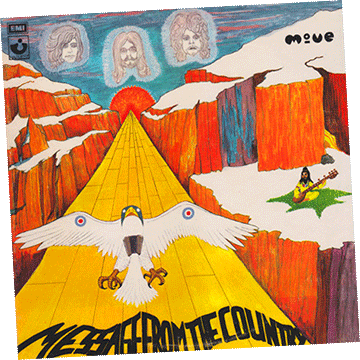
- Message From The Country (Harvest SHSP 4013) July 1971
The Move
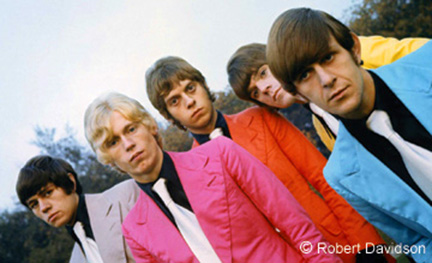
BIRMINGHAM
Updated January 2026
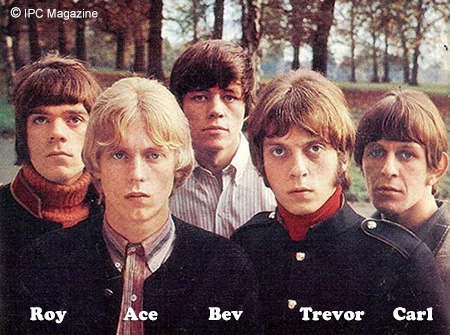
Carl Wayne lead vocal (left 1970)
Roy Wood vocal, lead guitar, bass, cello, oboe
Ace Kefford vocal, bass guitar (left 1968)
Trevor Burton vocal, guitar, bass (left 1969)
Bev Bevan drums and vocal
Rick Price vocal, bass guitar (joined 1969 - left 1971)
Jeff Lynne vocal, guitar, keyboards (joined 1970)
Richard Tandy guitar, bass, keyboards (joined 1971)
Bill Hunt keyboards (joined 1971)
"Flowers In The Rain"
One of the most successful pop groups to come out of Birmingham during the 1960s in terms of British chart success, The Move were difficult to categorize musically as their style ranged from pop to psychedelic, blues, progressive, 1950s style rock 'n' roll and even country and western! Above all, it was Roy Wood's talent as a highly original songwriter that propelled the band on an extended chart run.
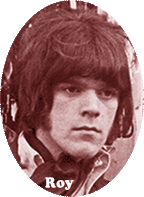
Many songs that Roy Wood composed for The Move were considered by some to be drug inspired but drummer Bev Bevan says they were based on fairy stories from Roy's childhood. Despite the group's controversial reputation and almost constant inner turmoil, The Move laid the foundations of what was to become one of the biggest and most successful rock bands of the 1970s.
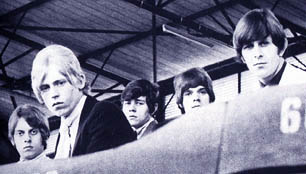
The Move were formed in early 1966 by guitarist Roy Wood (born November 8, 1946) from Mike Sheridan and The Nightriders, vocalist Carl Wayne (born August 18, 1943), bass guitarist Chris "Ace" Kefford (born December 10, 1946), and drummer Bev Bevan (born November 25, 1944) from The Vikings, and guitarist Trevor Burton (born March 9, 1949) from The Mayfair Set.
A band from London called "Davy Jones and The Lower Third" were performing one evening in Birmingham at the trendy Cedar Club on Constitution Hill. Their vocalist Davy Jones (later known as David Bowie) suggested to Trevor Burton and Ace Kefford that they should form their own group.
Ace Kefford recalled; "Trev and I were there one night and Davy Jones and The Lower Third was on. They were like The Who with target jumpers, hipster trousers, doing stuff like 'Heatwave' and 'Needle In A Haystack'. Chatting afterwards, David put the notion in our heads of forming our own band. We approached Roy Wood who was already singing that sort of stuff with The Nightriders. I had a similar spot in The Vikings doing 'Jump Back' and 'Every Little Bit Hurts', trying to copy Stevie Winwood like everyone else."
"From the first rehearsals we knew we had something special"
The original plan formulated by Trevor Burton, Ace Kefford, and Roy Wood was to start a band consisting of Birmingham's supposedly best musicians and create a look and sound similar to "The Who". The Cedar Club hosted late night jam sessions and it was there where the line-up first got together on stage. Veteran Brum vocalist Carl Wayne was invited to be the front-man and Bev Bevan was chosen as drummer after future Led Zeppelin star John Bonham turned them down (see Carl Wayne and The Vikings).
Bev Bevan remembers; "I knew the band had something special when Jasper Carrott came to see us. Up to that time he'd always been my harshest critic, slamming the groups I'd been in as 'a load of rubbish'. After he'd seen The Move he said: That's the best of the lot so far, I think you're going to make it." Trevor Burton recalled; "It felt different instantly. From the first rehearsals we knew we had something special."
Under the initial leadership of Carl Wayne (who was a few years older than the others), The Move played their debut gig at the Belfry Hotel in Stourbridge on January 23, 1966. The new group was well received and other successful gigs soon followed.
Material performed on stage by The Move at this time included many covers of American west coast groups such as "The Byrds" and "Moby Grape" as well as various Tamla Motown and rock 'n' roll classics. Although Carl Wayne handled most of the lead vocals, all the band members shared harmonies and each were allowed at least one lead vocal per show.
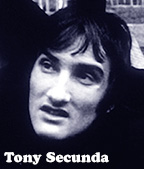
Following further bookings in the Birmingham area, former Moody Blues manager Tony Secunda saw them and offered his services. Tony Secunda was one of the more controversial pop managers of the 1960s and his tactics were likely a big influence on future Sex Pistols' manager Malcolm McLaren.
The group soon found out that Tony Secunda was not someone to be taken lightly. Bev Bevan said; "Shortly after he'd taken us on, he arranged a day of press for us in London. We strolled in about half an hour late and didn't think anything of it. He literally screamed at us, gave us such a bollocking. We'd never experienced anything like that before. From then on we were frightened of him!"
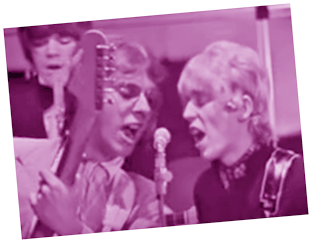
Tony Secunda secured The Move a season at London's famous Marquee Club where they became known for their wild stage act. Encouraged by Secunda, their bad behaviour there eventually got them banned from the place. This included flash bombs, smoke, and Carl Wayne using an axe to hack at effigies of political figures and ritualistic smashing of old TV sets.
The ensuing notoriety from this and other stunts (including attempts to get arrested) soon helped to gain The Move a recording contract with Deram, a subsidiary of Decca Records. Publicity-seeking Tony Secunda made sure that newspaper reporters were present when the band signed the contract on the back of a topless female model!
"Tony's idea was not to sign us to a label until we'd built up a reputation and got our name in the papers." said Ace Kefford. "Tony became our sole manager via his 'Straight Ahead Productions' company with Denny Cordell and some others. They had lease control over the master tapes which I believe WE had to pay for from our royalties. We were green as salad."
It was Tony Secunda who pushed Roy Wood into writing original songs for the band to record. Although Roy's only previously published composition was a single B-side by The Nightriders, he came up with the inventive 'Night Of Fear' for the Move's first record release. The song borrowed the catchy riff from Tchaikovsky's classical '1812 Overture' and was in the shops by the end of 1966, climbing all the way to Number 2 in the U.K. charts by early 1967.
"Nobody believed that Roy wasn't out of his head on drugs - but he wasn't"
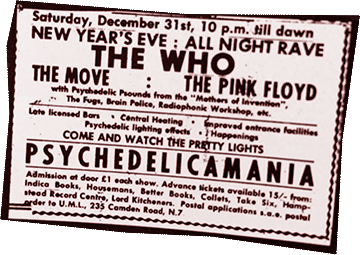
Unlike most pop songs, the up-beat melody for Night Of Fear contrasted strongly with Roy Wood's dark lyrics. A magazine article about The Move published at the time proclaimed; "Meet the pioneers of the psychedelic sound". Rumours spread that "psychedelic" must mean LSD drug-use and strange "happenings". Years later, Bev Bevan recalled; "Nobody believed that Roy wasn't out of his head on drugs - but he wasn't. It was all fairy stories rooted in childhood."
A band from London called "Bluesology" showed up early one evening for a performance in Birmingham at the Cedar Club and saw The Move rehearsing. Fronted by veteran vocalist Long John Baldry, their young organist named Reginald Dwight (now Elton John) in his official biography said; "We snuck in and watched them. Not only did they sound amazing, Roy Wood's songs sounded better than the cover versions they played. I can remember watching The Move and having a kind of revelation. This is it isn't it? This is the way forward. This is what I should be doing!"
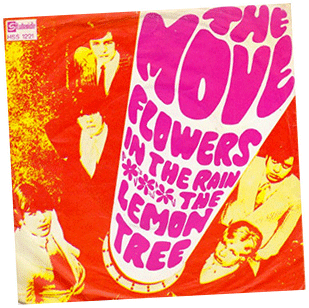
With seemingly effortless ease, Roy Wood followed up the success of Night Of Fear by composing two more great hit songs. The powerful guitar/bass driven 'I Can Hear The Grass Grow' got to Number 5 in the charts while the Move's third single was the ultimate paisley-pop anthem titled 'Flowers In The Rain' which made it all the way to Number 2 by the end of summer 1967.
This record also had the honour of being the first to be played on the BBC's new "Radio One" pop station. Disc jockey Tony Blackburn said the dramatic 'thunderstorm' sound effect that starts the record was mainly the reason he selected it.
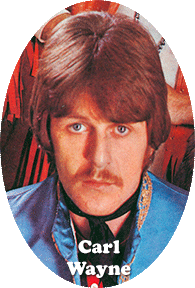
Now often pursued by swarms of screaming girls, the Move's new-found fame exposed them to the sort of wild fan mania that The Beatles had long-since grown weary of. Ace Kefford said; "The pressure of being in the charts and having your clothes ripped and hair pulled out by fans in the streets - I had scissors stuck in my eye - but for the same money I got in The Vikings." Along with constant requests for shows, public appearances and interviews, the group had little free time in their hectic schedule - even for recording.
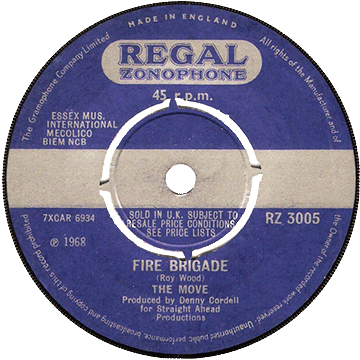
As an example of the pressure Tony Secunda placed the band under at the time, Roy Wood remembers; "We played a gig in London, went back to the hotel and Carl Wayne came up to me and said: "We've just been told that we're in the studio tomorrow and we've got to record a single. Have you got one?" I said "Well... not on me, not at the moment." He produced a bottle of Scotch, gave me the key to one of the hotel rooms and said "Get on with it". Roy stayed up all night composing 'Fire Brigade' and said; "They had to sort of hold me up to do the recording session!"
The Move's success ensured them regular radio and TV appearances. However, an ill-conceived publicity stunt for their latest record meant to capitalize on a current news tabloid scandal, resulted in promotional postcards being distributed that had a cartoon of prime minister Harold Wilson shown in a compromising position with his secretary.
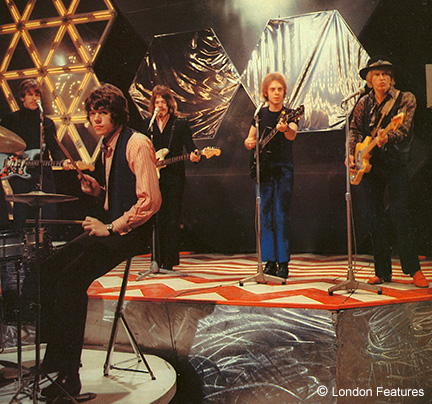
The PM was not amused and he took the group and their manager to court, suing for libel and winning the case. This resulted in the song-writing royalties for Flowers In The Rain being confiscated and donated to charities of Wilson's choice.
When interviewed for a music magazine at the time, Bev Bevan said; "We're turning away from this sort of thing now. People are beginning to associate us with gimmicks and nothing else. Truth is that we're musicians, not a circus act."
The Harold Wilson episode strained and ultimately ended the relationship The Move had with Tony Secunda and the band secured Don Arden as their new management. Don already had a reputation as one of the toughest managers in the music business and one whose methods were regarded as quite controversial, although he had pushed a number a groups to success such as The Nashville Teens, The Small Faces, and Amen Corner.
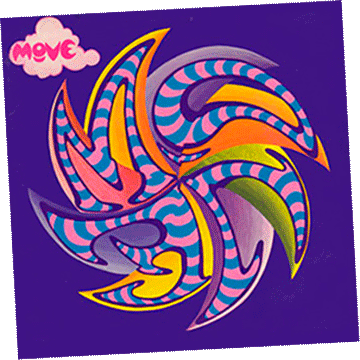
In November 1967, The Move went on a U.K. package tour that also included The Jimi Hendrix Experience, The Pink Floyd and Amen Corner (the Move supplied backing vocals to the Jimi Hendrix Experience album "Axis Bold As Love" on the track 'You Got Me Floatin'). The Move also had their first LP issued in 1968 and it reached Number 15 in the UK album charts.
The album's psychedelic cover art was painted by "The Fool" design group who also notably painted The Beatle's Apple boutique storefront and John Lennon's Rolls Royce amongst others. Despite the success of The Move's latest single 'Fire Brigade' that reached Number 3 in the UK record charts, all was not well in the band.
"Me and Trev did loads of acid... it screwed up my life man. Devastated me completely"
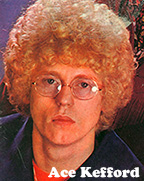
Ace Kefford left The Move in early 1968, reportedly owing to nervous exhaustion and mental breakdown. Ace admitted years later; "Me and Trev did loads of acid... it screwed up my life man. Devastated me completely." He tried recording a solo album and later formed his own band called The Ace Kefford Stand (see BrumBeat Ace Kefford feature). Trevor Burton took his place on bass guitar and The Move now reduced to a four-piece line-up, continued their hectic schedule of touring and promotional commitments. (Note: a version of Fire Brigade was also recorded by Brum band The Fortunes for release in the USA).
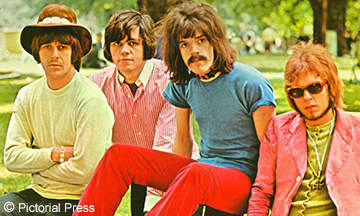
A new Move single titled 'Wild Tiger Woman', that had controversial lyrics, was issued in July 1968 but did not chart so became the group's first failure. It may have been banned by the BBC thus denying the record essential airplay on Radio One. The recording had also featured legendary session player Nicky Hopkins on piano.
However, The Move's next single, the majestic 'Blackberry Way', released at the end of 1968, deservedly topped the UK pop charts to become one of the classic records of the era. It's interesting to note that Roy Wood made the first demo recording of Blackberry Way in Jeff Lynne's home studio at Shard End. Jeff had replaced Roy Wood as guitarist in The Nightriders before they became The Idle Race.
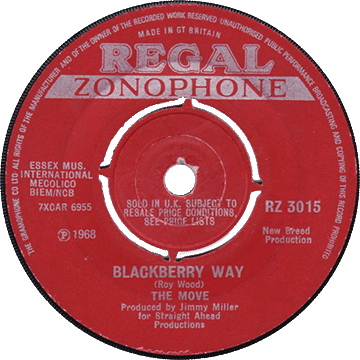
A harpsichord heard on the final recording of Blackberry Way was played by future ELO member Richard Tandy - at that time part of The Uglys line-up. Richard also played bass guitar for The Move at several gigs while Trevor Burton recovered from a shoulder injury. Although The Move were finally enjoying chart-topping success, there was more trouble brewing within the group's volatile line-up.
Trevor Burton quit the band in February 1969 following an argument on-stage with Bev Bevan during a show in Sweden. Trevor had stayed at Traffic's legendary "Cottage" in the company of Steve Winwood and his musical mates. Years later he said; "After spending time with these people I just couldn't go back and do 'Flowers In The Rain' and 'Blackberry Way'. I aspired to something more and didn't want to be a pop star." His departure forced the cancellation of the Move's scheduled American tour.
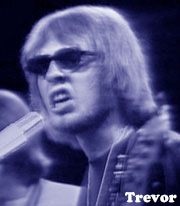
In a newspaper interview, Carl Wayne said; "Trevor wants to play country/blues and this doesn't fit in with our ideas. He is joining The Uglys who are going to re-form and change their name. Our previous manager Tony Secuda will handle them." Trevor soon formed a Brummie "supergroup" to include The Uglys front-man Steve Gibbons and former Moody Blues vocalist/guitarist Denny Laine with the line-up named "Balls" and managed by ex Move manager Tony Secunda (see Balls).
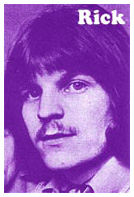
Trevor's place in the Move was filled by Rick Price from the Birmingham band Sight And Sound who were regular performers on the local cabaret circuit. Rick was a veteran of the Brumbeat scene and had played guitar in The Cimarrons who recorded a track on the DIAL Brum Beat LP in 1964.
Rick said; "I was doing Roy Wood impressions in a band called Sight And Sound. Then Roy turned up at a gig one night, completely out of the blue, and asked me if I'd like a job. Fortunately he came in late so he missed my take-off of him!"
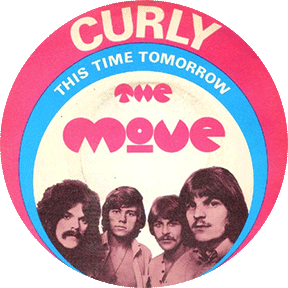
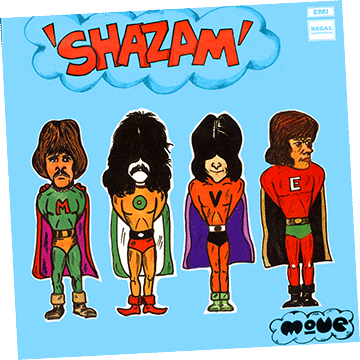
During the summer of 1969, the group began recording sessions for what would become their second LP titled "Shazam" (Roy's old friend Mike Sheridan made the illustration for the album cover). The next Move single 'Curly', was not as strong as Blackberry Way but still made it to Number 12 in the charts and in October 1969, the band embarked on their first and only tour of the U.S.A.
The Move's American tour was not a big success, mainly due to lack of planning and promotion. Although The Move had a more serious "underground" following in the US, record sales there were small with the only airplay on alternative or college FM stations (see the BrumBeat review of the excellent "The Move Live At The Fillmore 1969" CD by clicking HERE).
On their return to the UK, The Move went - like many West Midlands bands before them - on the lucrative "cabaret circuit". By this time they were again under new management from pop manager Peter Walsh who specialized in cabaret acts and had bought the group's contract from Don Arden.
The cabaret shows caused friction between Carl Wayne and Roy Wood whose increasingly wild appearance on stage would often draw ridicule from the generally older audience. Additionally, there were disagreements over who should sing lead vocal on the Move's new singles.
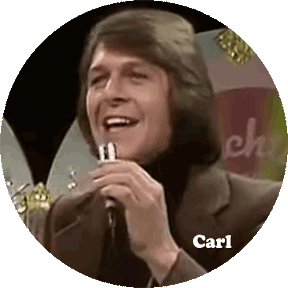
In the winter of 1970 following a nasty incident involving an audience member during one of the Move's cabaret performances, Carl Wayne quit the group for a solo performing career. After recording an album, he went on to enjoy success as a cabaret singer and TV actor, even appearing on ITV's popular Crossroads series and in various theatrical productions - a far cry from smashing televisions on stage with The Move.
In 1999 Carl Wayne became lead vocalist for Manchester's world-famous band "The Hollies" as replacement for their founding member Allan Clarke who had retired from fronting the band. Sadly, Carl Wayne passed away on August 31, 2004 at age 61 after a battle with cancer (see Brum Beat Carl Wayne feature).
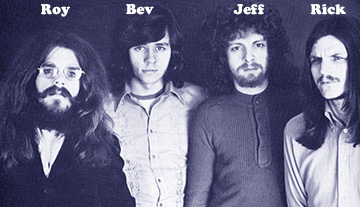
The Move once again came under Don Arden's management and Roy Wood, now firmly in artistic control of the band, asked his friend Jeff Lynne from The Idle Race to join as Carl Wayne's replacement (see The Idle Race). Lynne had previously been asked after Trevor Burton's departure but had declined although this time he accepted the offer and the first Move single recorded with him entitled 'Brontosaurus', was issued in April of 1970.
To promote the 45, The Move appeared on TV with Roy Wood wearing outrageous clothes and facial make-up, thus pre-dating the "Glam Rock" era by a few years. The resulting publicity helped the record gain a Number 7 chart position although it had a heavier sound than their previous pop-oriented singles.
"The Orchestra will try and get away from all this self-indulgent rubbish that a lot of groups seem to be playing today"
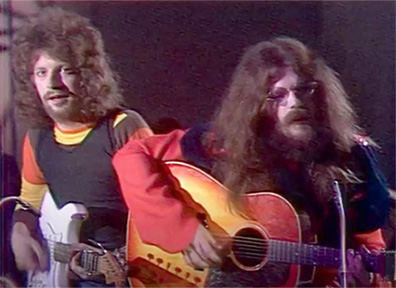
Roy Wood and Jeff Lynne had an idea to form a new band that would incorporate classical instruments and create a sound similar to what the Beatles had achieved on their innovative recording of 'I Am The Walrus'. Former Moody Blues vocalist Denny Laine had experimented with a similar concept in 1967 with his "Electric String Band" (see Denny Laine), and The Spencer Davis Group's 'Time Seller' single had also featured a heavy cello backing.
With the financial backing of their manager Don Arden (his daughter Sharon would go on to marry and manage Ozzy Osbourne), Roy Wood and Jeff Lynne began composing and recording tracks for an album based on their orchestral concept. They also discontinued touring by the end of 1970 but were required by contract to continue recording and promoting records by The Move.
When interviewed at the time, Roy Wood said; "Even the older generation realises now that pop is a valid form of music. Everywhere now, different kinds of music are coming together. We plan to make underground albums but the singles will be commercial. There's no point in writing songs if you can't sell them."
Jeff Lynne said; "The Orchestra will try and get away from all this self-indulgent rubbish that a lot of groups seem to be playing today. The material will have a definite form, will consist of definite movements, and it'll still be freaky but we want to get away from the nine minute guitar solos and intellectualism. We plan to run the Orchestra and the Move as two separate units. But the rumours that The Move will break up before the autumn just aren't true."
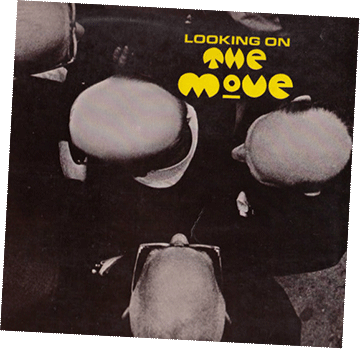
Ironically, the Move now entered their most prolific period in terms of recording with a new progressive-sounding album titled "Looking On" of all original compositions by Roy Wood and Jeff Lynne in addition to new singles and enough songs for a fourth Move LP. Meanwhile, the recording of their new "orchestra" album progressed at a slow pace.
Bass guitarist Rick Price left the group to help form Carl Wayne's new backing band (later to be named Mongrel) after The Move stopped touring although he did help out on their live appearances when required as did Richard Tandy from The Uglys and keyboard player Bill Hunt from Breakthru. However, the next two new Move singles titled 'Tonight' and 'China Town' (both composed by Roy Wood) were significant UK hits in 1971 and kept The Move in the public eye as they continued to make appearances on BBC Radio and TV shows like "Top Of The Pops".
After completing another Move LP titled "Message From The Country", The Move's final single, the Jerry Lee Lewis styled 'California Man' was released and reached Number 7 in the UK charts in May of 1972. The much heavier guitar-driven B-side titled 'Do Ya' and composed by Jeff Lynne, also became a minor hit in the USA - oddly the only Move record to have an impact on the American charts. This song was re-recorded and re-issued by ELO in 1976 as a track on their hugely successful album "A New World Record".
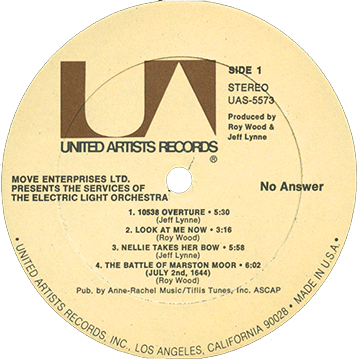
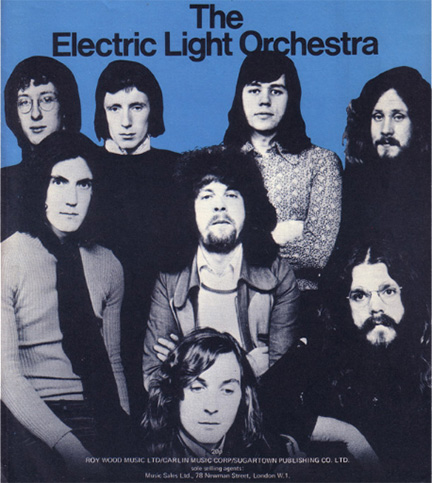
Finally, the new Roy Wood/Jeff Lynne/Bev Bevan album was completed and released under the name of "The Electric Light Orchestra" (name derived from the Midland Light Orchestra). A single from the album, '10538 Overture' composed by Jeff Lynne, made the Top Ten in the British charts and a national tour along with radio and TV appearances to promote the new band followed.
The group now also included Richard Tandy (previously with The Uglys) on bass guitar, Bill Hunt (from Breakthru) on piano and french horn, cellists Andy Craig and Hugh McDowell, plus Wilf Gibson on violin. Steve Woolam who played violin on the album decided not to stay with the band. Sadly, he had personal problems and committed suicide not long after but his contributions to this first ELO album should not be forgotten.
The Electric Light Orchestra album (issued with the title "No Answer" in the USA) was a critical success, but sold poorly due to the experimental nature of most of the songs. Jeff Lynne would later remark that much of it sounded like "a load of old dustbins falling down the stairs" though he has since acknowledged it as ground-breaking and innovative for that time. Even today, '10538 Overture' remains a staple of Jeff's concert performances with ELO.
Interestingly, the group around this time were also hired to act and perform in an experimental low-budget "science fiction" film that has never been released. The sound track was to have featured recordings by both The Move and The Electric Light Orchestra.
"Showdown"
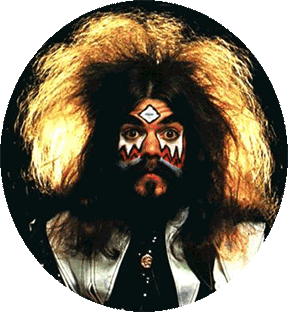
After reportedly "falling-out" with Jeff Lynne from differences in opinion over musical direction and coupled with the difficulties in reproducing the Electric Light Orchestra sound live on stage, Roy Wood left the group in early 1973 during recording sessions for their second album. He was secretly forming a new band to be called "Wizzard" (see Mongrel). When interviewed a few years later, Bev Bevan said; "He left Jeff and I rather in a mess because he took some of the guys from ELO with him and there was a lot of bad feeling at the time."
The Wizzard line-up included former Move bass guitarist Rick Price, drummers Charlie Grima (see The Ghost) and Keith Smart (see The Uglys), saxophonists Mike Burney and Nick Pentelow, plus fellow ELO defectors Bill Hunt on piano and Hugh McDowell on cello. Roy also had his first solo LP issued titled "Boulders" on which he had played all the instruments himself.
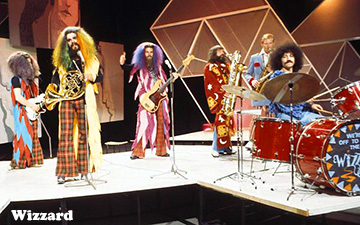
After a debut at Wembley Stadium as part of the famous London "Rock and Roll Show" on August 5, 1972 (the promoters advertised them as "The Move"), Wizzard shot to the forefront of the "Glam Rock" movement with memorable appearances on Top Of The Pops and the release of several top selling singles. This included two Number One hits in 1973; 'See My Baby Jive' and 'Angel Fingers' as well as the seasonal favourite 'I Wish It Could Be Christmas Everyday' that has since been covered by a variety of recording artists.
Wizzard and Roy Wood's chart success continued into the later 1970s before he disbanded the group, largely because of their inability to make an impact in North America and the resulting disagreements with his record company management. Following his less successful "Wizzo Band" and "Helicopters" group projects, Roy seemed to keep a lower profile while writing and producing for other artists.
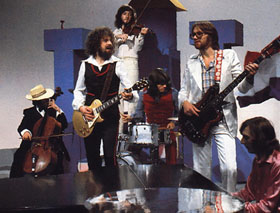
Meanwhile, the Electric Light Orchestra (or E.L.O.) now under Jeff Lynne's artistic control, along with remaining original Move member Bev Bevan and ever-loyal keyboardist Richard Tandy, went on to become one of the most successful bands of the 1970s, achieving hit records and multi-million selling albums worldwide. Managed by Don Arden (who also managed fellow Brummies Black Sabbath), ELO's spectacular success - particularly in the USA where they toured consistently and played to packed stadiums - continued well into the 1980s.
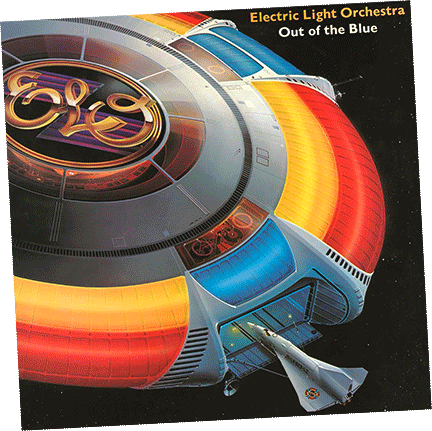
Despite some line-up changes along the way, ELO made many classic recordings, all composed by Jeff Lynne, such as; Evil Woman, Telephone Line, Mr Blue Sky and Don't Bring Me Down amongst many others. Their British number one titled 'Xanadu' was recorded with Olivia Newton John who also starred in the movie of the same name along with legendary American performer Gene Kelly.
ELO's live sound engineer was Richard Pannell who had played guitar in 1960s Brum groups The King Bees and Craig along with famous drummer Carl Palmer (of Emerson, Lake & Palmer). Brum musician Dave Morgan from The Uglys (who wrote some single B-sides for The Move) was also part of ELO's 1980s line-up.
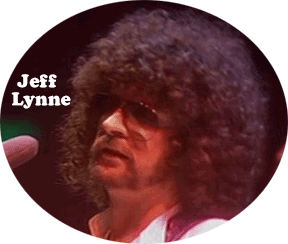
ELO disbanded in 1985 but Jeff Lynne continued to have huge behind-the-scenes success as songwriter and producer, helping to revive the recording careers of George Harrison, Roy Orbison and Tom Petty. He also formed the highly-acclaimed successful supergroup "The Traveling Wilburys" with Harrison, Orbison, Petty and Bob Dylan and realized many a producer's greatest ambition when he brilliantly produced John Lennon's 'Free As A Bird' for the Beatles controversial "reunion" in 1995.
Jeff Lynne finally went out on the road again in 2001 with a new ELO line-up and album. His CD titled "Long Wave" (see review) issued in 2012 featured his own recordings of classic songs he first heard as a boy growing up in Birmingham. While now having lived in sunny Los Angeles California for many years, Jeff continues to be in demand as a producer and songwriter of considerable talent.
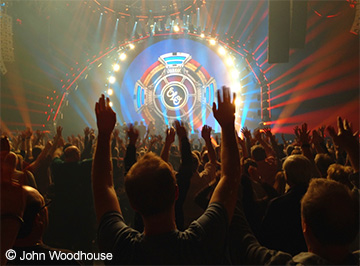
The year 2015 saw the release of Jeff's all-new ELO album titled "Alone In The Universe" to enthusiastic reviews and sold-out shows. Jeff was awarded a star on Birmingham's own "Walk of Fame" in 2014 and ELO were finally inducted into the famous "Rock and Roll Hall of Fame" in 2017.
In 1986, Bev Bevan and Roy Wood organized the "Heartbeat 86" charity concert in Birmingham to raise funds for the local children's hospital. The show was a big success and featured performances by Brum bands ELO, UB40, The Moody Blues, Denny Laine, Robert Plant, Steve Gibbons, The Fortunes, The Rockin' Berries, The Applejacks and George Harrison. Roy continues to perform today with his own "Roy Wood Big Band" as well as making regular appearances on radio and television.
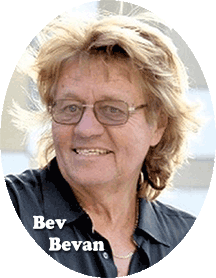
After a brief stint in the legendary Brum heavy metal band Black Sabbath, drummer Bev Bevan formed "The Electric Light Orchestra Part II" in the late 1980s which included some former ELO members and performing songs made famous by the 1970s version of ELO. The group toured worldwide for about ten years until Bev Bevan's departure to become a part-time radio DJ and session player. Still based in Birmingham, he has since performed with his own band and occasionally tours with a new line-up of "The Move" that also includes original member Trevor Burton.
One of Bev Bevan's latest ventures is his collaboration with famous Brummie comedian and lifelong friend Jasper Carrott featuring live performances of their popular show called "Stand Up & Rock". The line-up that also includes former Rockin' Berries vocalist Geoff Turton has toured throughout the UK.
In 2018, Trevor Burton's health suddenly declined, forcing him to give up playing live music. Sadly, his illness has now confined him to a wheelchair. Click HERE for more info.
Rick Price who joined The Move in 1969 and went on to play in Wizzard with Roy Wood, passed away on May 17, 2022. In recent years he had performed with The Rockin' Berries (See Rick Price Tribute).
Copyright © John R Woodhouse
Sources: 'The Guinness Book of British Hit Singles' 5th edition 1985; 'The Electric Light Orchestra Story' by Bev Bevan 1980; 'Split Ends' LP by United Artists 1972; 'The Best Of The Move' LP by A&M Records 1974; 'The Harmony Illustrated Encyclopedia of Rock' 1982; 'Ace Kefford interview - Record Collector' July 1994 by Alan Clayson; 'The Move Anthology' CD book by Mark Paytress 2008; plus contributions from Trevor Burton and Rick Price.
The Move 1960s Record Releases
(highest UK chart position in brackets)
Singles:
Extended Player:
Albums:
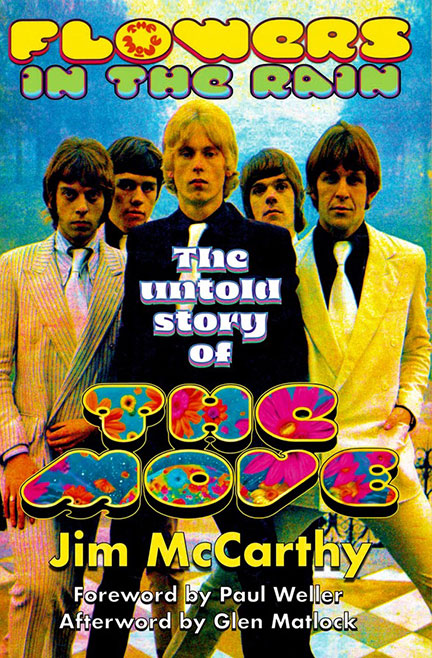
To see the exclusive BrumBeat review of "Flowers In The Rain - The Untold Story of The Move" fantastic new book by author Jim McCarthy click HERE
To see the exclusive BrumBeat review of The Move Live At The Fillmore 1969 CDs click HERE
To see the exclusive BrumBeat review of the Move's 40th Anniversary Remaster CDs click HERE
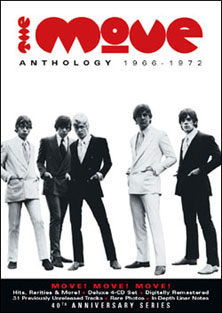
The Move Anthology 1966-1972 (containing four incredible CDs and book) Box Set is now available!
Other official Move related websites are listed below:
Roy Wood: www.roywood.co.uk
FACE THE MUSIC - the official Jeff Lynne and E.L.O. & related information service: www.ftmusic.com
You can join the Official Move Mailing List at: www.eskimo.com/~noanswer/movelist.html
If you would like to contribute to this page, please e-mail john@brumbeat.net